Independent creator
Uses a short concept, reference image, or motion direction to explore several visual treatments.
Gets a faster first pass while retaining responsibility for selection, editing, and publishing.
higgsfield ai reviewsIs Higgsfield AI a credible creative tool or simply polished hype? This guide separates the underlying workflow from marketing claims so you can judge it against your own production needs.
Related checks
Before AI-assisted video tools, trust was established through portfolios, demos, references, and repeatable production processes.
Today’s workflow
Legitimacy is easier to assess when the tool is treated as a production aid rather than an authority. Test the output, inspect the controls, and keep human review in the loop.
Uses a short concept, reference image, or motion direction to explore several visual treatments.
Gets a faster first pass while retaining responsibility for selection, editing, and publishing.
higgsfield ai reviewsTurns a product idea into social clips, campaign concepts, or visual prototypes before a full shoot.
Reduces early-stage iteration time without treating generated footage as final brand approval.
higgsfield ai videoUses generated shots as inserts, transitions, mood references, or placeholders in a larger timeline.
Adds options to an edit while checking continuity, rights, and technical quality independently.
is higgsfield ai safeExperiments with prompts, camera movement, and visual references to understand AI video production.
Builds practical judgment by comparing outputs instead of accepting a single result as proof.
higgsfield ai for iosVerification flow
The important change is not that software removes creative judgment. It is that more of the exploratory work can happen before a camera crew, animator, or full post-production team is involved.
Define the subject, intended audience, aspect ratio, visual references, and what a successful result must communicate.
Run a small set of variations, looking for consistency, motion quality, prompt adherence, and artifacts rather than choosing the most dramatic frame.
Review factual claims, likeness rights, music, brand rules, continuity, and export quality before any public or client-facing use.
Honest boundaries
People who adopt AI video successfully usually switch one part of the workflow first: ideation, previsualization, or rough-cut support. They do not outsource every creative or legal decision.
A convincing image or clip is not evidence that every detail is correct, original, or suitable for publication.
Workaround
Use human review, source checks, and a documented approval step.
Generated shots may still need editing, sound, color work, continuity fixes, captions, and delivery formatting.
Workaround
Treat the output as an asset or draft inside a broader workflow.
Small changes in prompts, references, or motion can create differences that matter in a sequence.
Workaround
Keep references controlled and test continuity across the full shot list.
A tool being accessible does not automatically resolve likeness, trademark, copyright, or client-usage concerns.
Workaround
Get permission where needed and record the provenance of important assets.
Side-by-side view
A legitimate tool should be judged by observable behavior: what it accepts, what it produces, what it explains, and where a person must still intervene.
First visual concept
AI-assisted workflow
Prompt, reference, or rough direction can produce an exploratory visual.
Traditional production workflow
A sketch, moodboard, storyboard, or location reference establishes the idea.
Iteration speed
AI-assisted workflow
Multiple visual directions can be tested before committing to a full shoot or edit.
Traditional production workflow
Changes may require reshoots, new assets, or additional design time.
Creative control
AI-assisted workflow
Control depends on available references, prompts, settings, and editing tools.
Traditional production workflow
Control comes from people, equipment, staging, performance, and post-production.
Consistency
AI-assisted workflow
Results can vary across frames, shots, characters, and camera movement.
Traditional production workflow
Continuity is planned and managed through the production process.
Review responsibility
AI-assisted workflow
The user must check quality, accuracy, rights, and suitability before use.
Traditional production workflow
The production team still owns review, approvals, and delivery standards.
Best role
AI-assisted workflow
Ideation, previsualization, experimentation, and selected production assets.
Traditional production workflow
Final controlled capture, high-stakes messaging, and repeatable delivery.
Trust signals
These are practical checkpoints, not promises. A tool becomes easier to trust when its strengths and boundaries remain visible during ordinary use.
A simple test
The most useful legitimacy check is a small, repeatable comparison using the same brief, references, and review criteria.
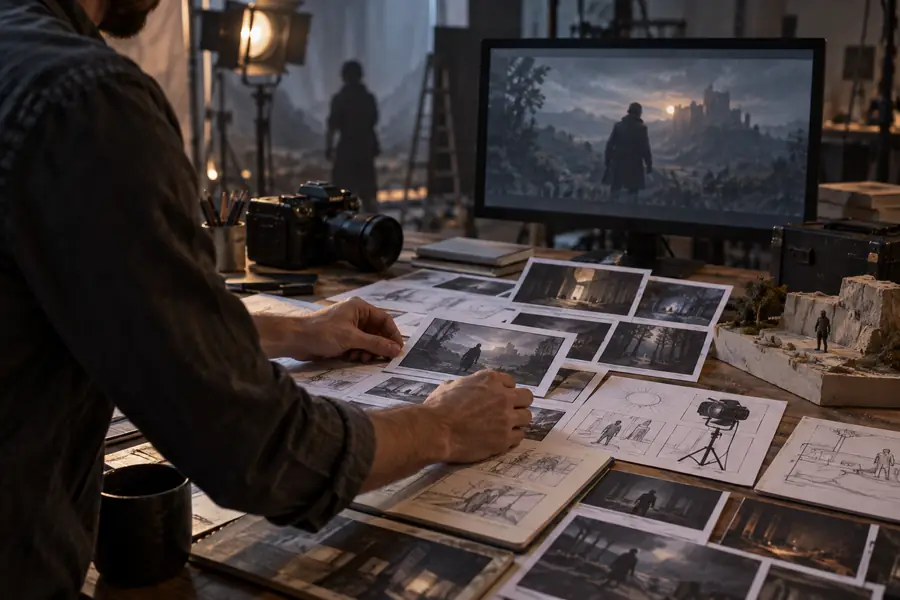 Brief and reference
 Reviewed visual result
Common questions
A credible assessment should leave room for both useful results and sensible caution.
It should be assessed as a creative software tool through its observable workflow, outputs, controls, and published terms. A polished interface alone is not enough, so test a small project and review the result before relying on it.
It may support professional ideation, previsualization, and selected video assets, but suitability depends on the project. Review consistency, technical quality, rights, privacy, and client requirements before delivery.
No. A strong clip demonstrates that the workflow can produce a useful result, not that every claim, asset, or use case is automatically safe. Legitimacy requires clear expectations and human verification.
Check factual accuracy, likeness and copyright concerns, music and trademark permissions, visual continuity, export quality, and any client or platform rules. Keep a record of references and approvals for important projects.