Social creator
You have a short product idea but no filmed footage yet.
Test the mood, camera movement, and opening image before committing to a full edit.
higgsfield ai freeTrial starting point
The higgsfield ai free trial is best approached as a focused test: bring one clear idea, create a small first draft, and decide whether the workflow fits your project.
Related routes
Choose the access path that matches your goal before you begin. Each route answers a slightly different question about starting, experimenting, or extending a video workflow.
Before you start
A good trial run is deliberately small. The aim is not to finish a campaign in one sitting; it is to learn how your idea translates into a usable visual result.
You have a short product idea but no filmed footage yet.
Test the mood, camera movement, and opening image before committing to a full edit.
higgsfield ai freeYou need several visual directions for a campaign discussion.
Turn one concise brief into a visual starting point for feedback and refinement.
higgsfield ai unlimited creditsYou want to evaluate motion and atmosphere without building a complete scene.
Compare a small number of controlled prompts and identify the style that deserves more work.
how to use higgsfield ai for freeYou are unsure whether an AI video workflow suits your creative process.
Use one low-stakes concept to judge the interface, output, and amount of iteration required.
higgsfield ai freeTrial workflow
Keep the first experiment concrete. A subject, setting, movement, and visual mood give you enough structure to learn from the result.
Name the subject, environment, action, camera movement, and mood. Avoid combining several unrelated scenes in the first prompt.
Submit the brief through the trial entry point and inspect the result as a test, not a final deliverable.
Change only one element at a time, such as pacing, lighting, framing, or movement, so you can tell what improved the result.
Keep the test small
These three checkpoints help you decide what to do next without assuming that every trial includes the same tools, limits, or output behavior.
Choose deliberately
The right choice depends on whether you are validating an idea or expecting repeated production. Treat current availability and allowances as details to verify at the point of use.
Best for
Free trial
Testing one concept
Broader access
Developing several concepts
Prompt strategy
Free trial
Short and specific
Broader access
More structured variations
Iteration need
Free trial
Keep revisions selective
Broader access
Allow room for comparison
Main question
Free trial
Does this workflow fit?
Broader access
Can this support ongoing work?
Output expectation
Free trial
A learning draft
Broader access
A more developed sequence
What to verify
Free trial
Current access and limits
Broader access
Current allowances and tools
Set expectations
The first draft is useful when it gives you something specific to evaluate. Compare the starting brief with the generated direction, then decide whether another pass is worthwhile.
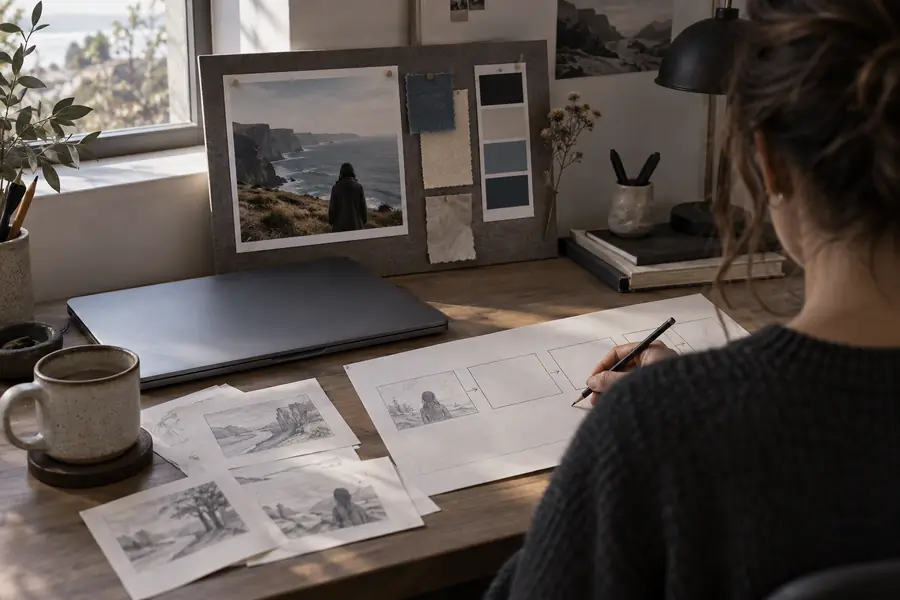 Starting brief
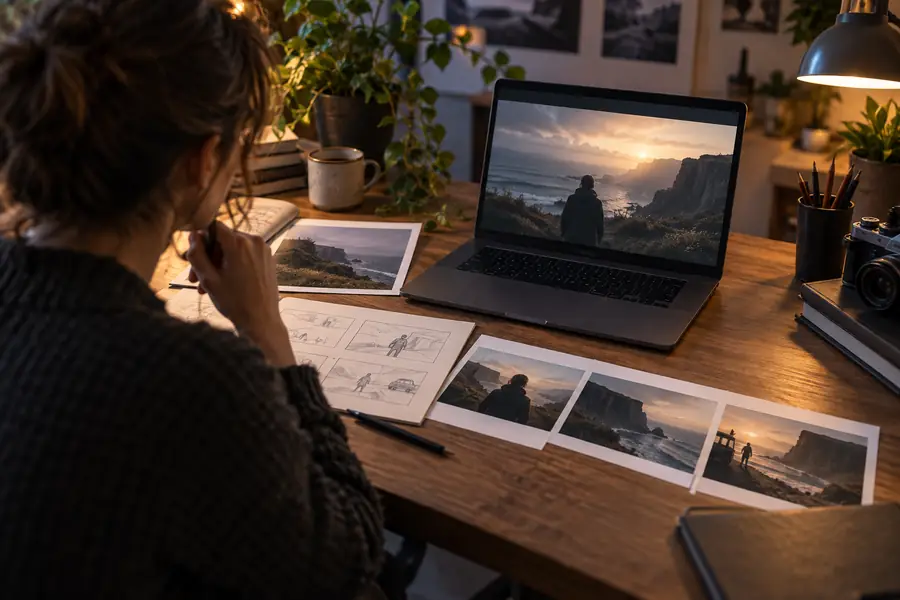 First visual draft
Honest boundaries
A free trial can answer whether the workflow is promising, but it cannot remove every creative or technical constraint.
If the subject, movement, and mood are unclear, the output may feel generic or difficult to judge.
Workaround
Write one scene with one dominant action before adding stylistic details.
A first generation may need several revisions, and the available route may not suit every production requirement.
Workaround
Use the trial to validate direction, then plan a separate finishing workflow.
Trial availability, generation allowances, model access, and interface behavior can change.
Workaround
Check the current entry point and treat displayed limits as the authoritative details.
The tool can suggest a visual result, but you still need to assess continuity, brand fit, pacing, and rights.
Workaround
Review every draft against the actual audience and publishing context.
Common questions
It is a way to test the platform's AI video workflow with a small initial project. The exact tools, allowances, and access conditions may change, so verify the details shown when you open the current trial route.
A route described as a free trial is intended to let you begin without the same commitment as broader access. Read the current access notice carefully, especially for limits, required steps, and what happens after the trial allowance is used.
No. A concise prompt that names the subject, setting, action, camera movement, and mood is usually easier to evaluate than a crowded paragraph. Start with one scene and refine only the weakest element.
Choose a short, low-stakes concept that exposes the workflow clearly, such as a product moment, atmospheric establishing shot, or simple character action. Avoid beginning with a multi-scene production that is difficult to judge in one pass.
Treat the first result as diagnostic rather than final. Tighten the brief, change one variable, and test again if access permits; if the core motion or style still misses your goal, the route may not be the right fit for that project.