First-time creator
You have a visual idea but no finished script, storyboard, or editing plan.
Use one short prompt to test whether the concept has enough visual direction to develop further.
how to use higgsfield ai for freeFree access guide
This guide shows where a free starting point can help, what to prepare before you begin, and which limits to check before investing time in a larger video project.
Related routes
Use these related guides when your question is about a trial, ongoing credits, or a practical no-cost workflow.
Who it helps
The best use of a free route is usually a small, specific test rather than an attempt to complete an entire production in one pass.
You have a visual idea but no finished script, storyboard, or editing plan.
Use one short prompt to test whether the concept has enough visual direction to develop further.
how to use higgsfield ai for freeYou need several possible hooks for a short product, lifestyle, or announcement clip.
Create a small set of prompt variations, then keep only the direction that communicates clearly at a glance.
higgsfield ai free trialYou are comparing moods, camera movement, settings, or character concepts before production begins.
Treat free generation as a visual test bench, not as a guarantee of final continuity or exact control.
higgsfield ai unlimited creditsYou want to explore a scene treatment before committing to a shoot, edit, or larger generation run.
Start with one tightly scoped shot and record what worked in the prompt, reference, and motion description.
how to use higgsfield ai for freeSimple workflow
A disciplined first pass helps you learn more from limited access than a long, vague prompt or an oversized project brief.
Choose a single shot, subject, setting, and camera action. Avoid combining a full sequence, multiple characters, and several transitions in the first request.
State the subject first, then the environment, lighting, movement, framing, and mood. Specific visual instructions make the result easier to judge.
Assess composition, motion, consistency, and usefulness for your actual project. Revise one variable at a time instead of changing everything at once.
Visual checkpoint
The comparison below is an illustrative way to think about iteration: a vague starting idea becomes more useful when the subject, setting, and movement are explicit.
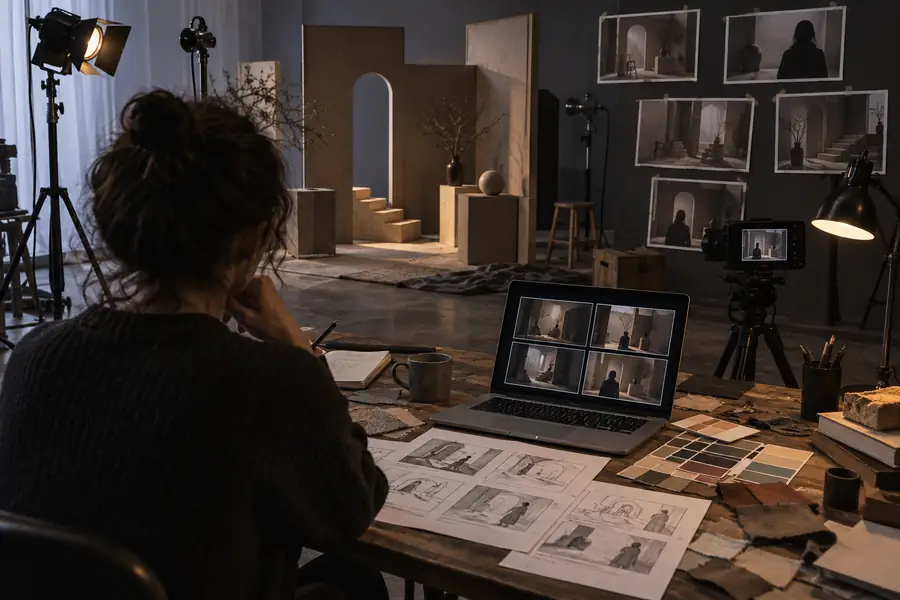 Loose direction
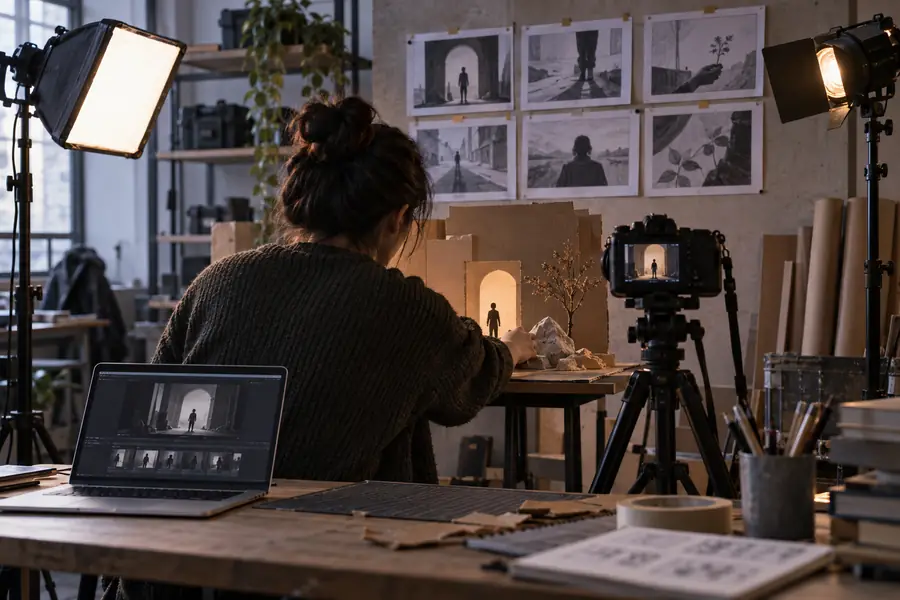 Defined direction
At a glance
These numbers describe the practical structure of a careful free-access test, not guaranteed product quotas or account benefits.
Set expectations
A free route can be useful for exploration, but it should not be treated as an unlimited production pipeline. Check the current interface and access terms before planning around it.
Free availability, feature visibility, queues, and account requirements may change over time or by route.
Workaround
Confirm the current starting path before you prepare a large batch of prompts.
A free entry point does not automatically mean unlimited generations or unlimited revisions.
Workaround
Begin with one high-value test and save the prompt structure that produces the clearest result.
A first generation can miss continuity, exact text, precise identity, or the motion you imagined.
Workaround
Use outputs as references and test the most important failure point separately.
Multiple subjects, detailed choreography, and long sequences are harder to judge from a single free experiment.
Workaround
Break the concept into short shots and evaluate each shot before building a sequence.
Common questions
Answers to the questions people usually mean when they search for a free way to explore this type of video tool.
A free starting route may be available, but the exact access conditions can depend on the current product flow. Check the live interface for any sign-in, credit, queue, feature, or export requirements before relying on it.
The most useful first test is a short, clearly defined visual idea with one subject, one setting, and one main camera action. This lets you evaluate the creative direction without assuming that every advanced feature is included.
No. Free access and unlimited credits are different questions. Treat credits, generation counts, duration, and revision limits as details to verify rather than promises implied by the word free.
Begin with one shot instead of a complete film. Describe the subject, environment, lighting, framing, and movement, then change one part of the prompt at a time so you can see what improved the result.
Usually, it is better viewed as an exploration step. A free test can help you validate a mood, shot idea, or visual direction, while continuity, detailed editing, and dependable delivery may require additional tools or access.